Nov 03, 2025
Company News

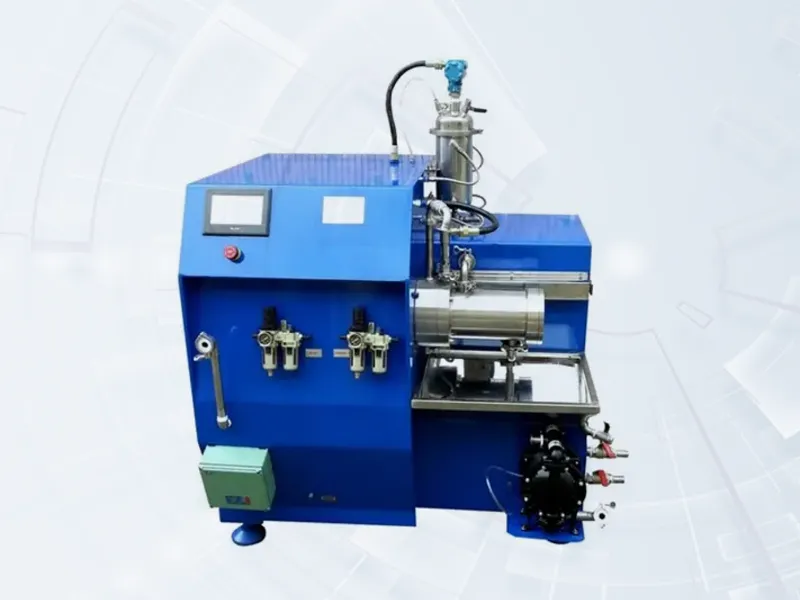
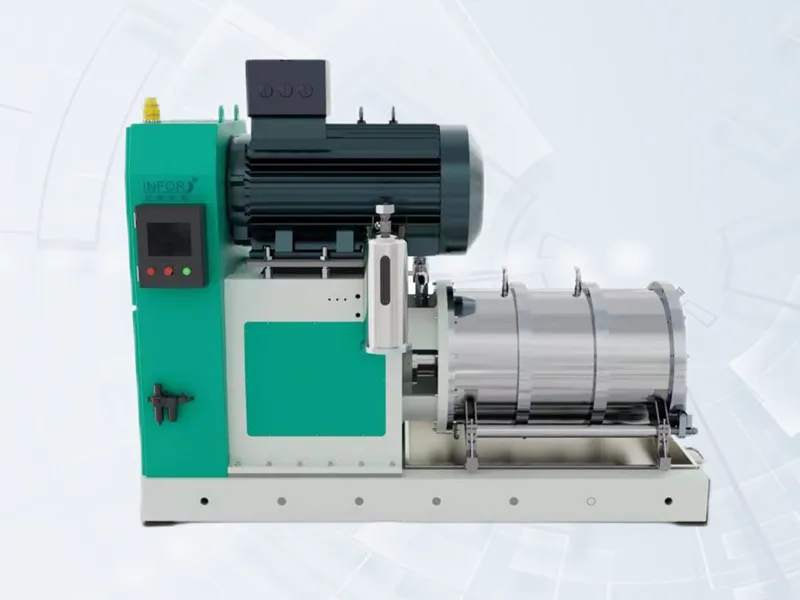
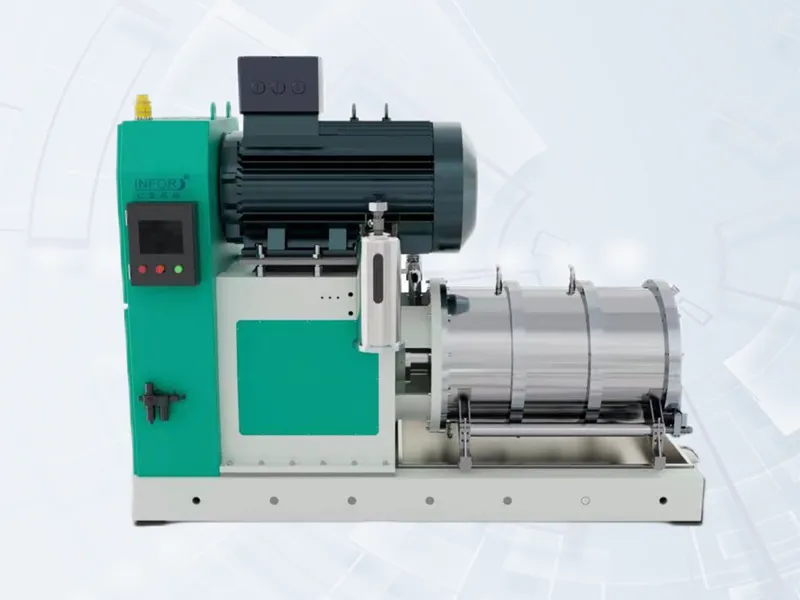

Choose micron grinding when the required product performance can be achieved at micrometer-scale particle sizes and production cost, throughput, and process simplicity are priorities. Choose nano grinding when finer particles are necessary to improve dispersion stability, surface activity, optical properties, conductivity, coating performance, or other functional characteristics.
The key is not to grind as fine as technically possible. The correct target is the coarsest particle-size distribution that consistently delivers the required material performance. Moving from several microns to submicron or true nanoscale particles can require smaller grinding media, higher energy input, better cooling, more precise separation, and tighter process control.
Micron grinding generally targets particles measured in micrometers (μm), while true nanoscale dimensions are approximately 1–100 nm. In industrial wet grinding, however, the term "nano grinding" is also commonly used for processes that move materials deeply into the submicron range and toward nanoscale particle distributions.
The practical difference is therefore more than the unit of measurement.
Micron grinding is usually suitable when the objective is conventional particle-size reduction, smoothness, pigment development, suspension quality, or improved downstream processing. Nano grinding becomes relevant when product functionality depends strongly on particle size and distribution.
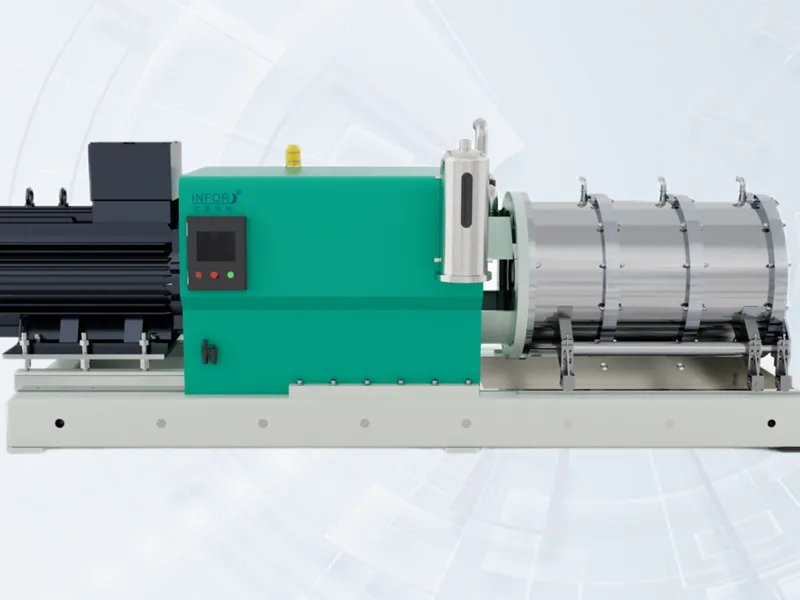
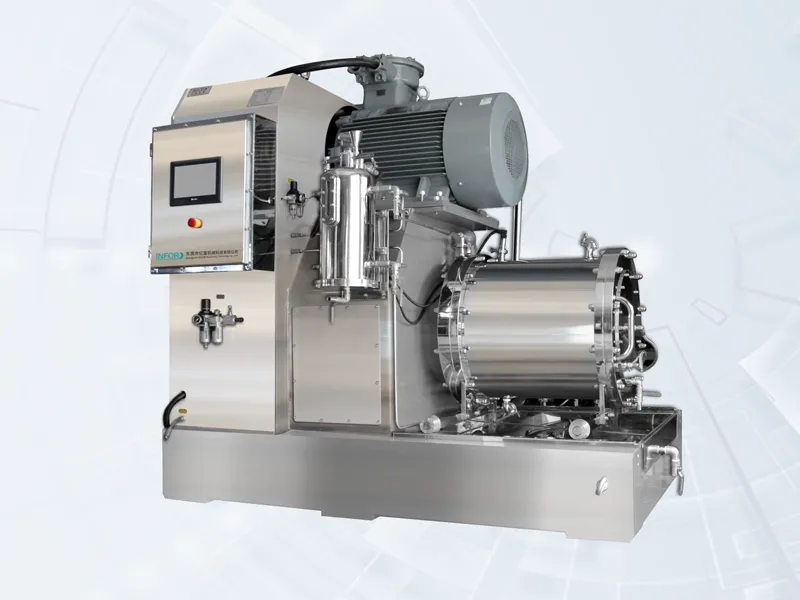
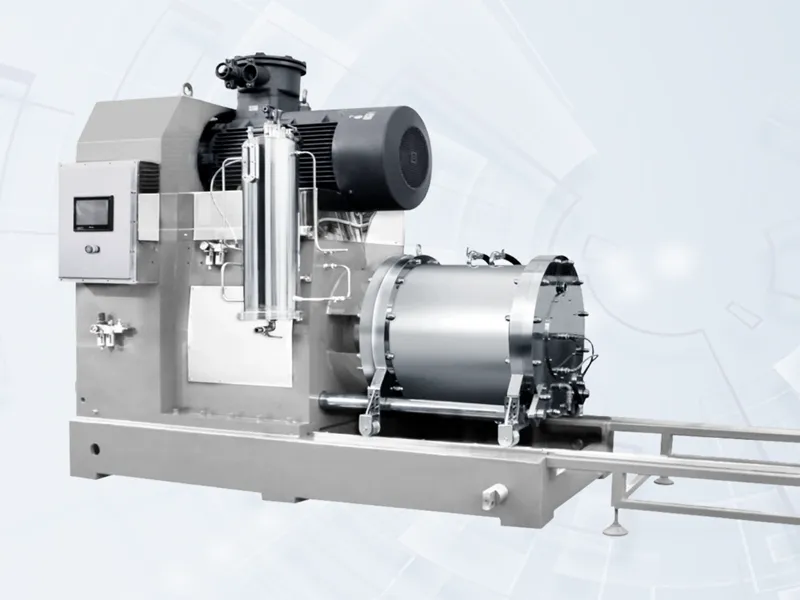
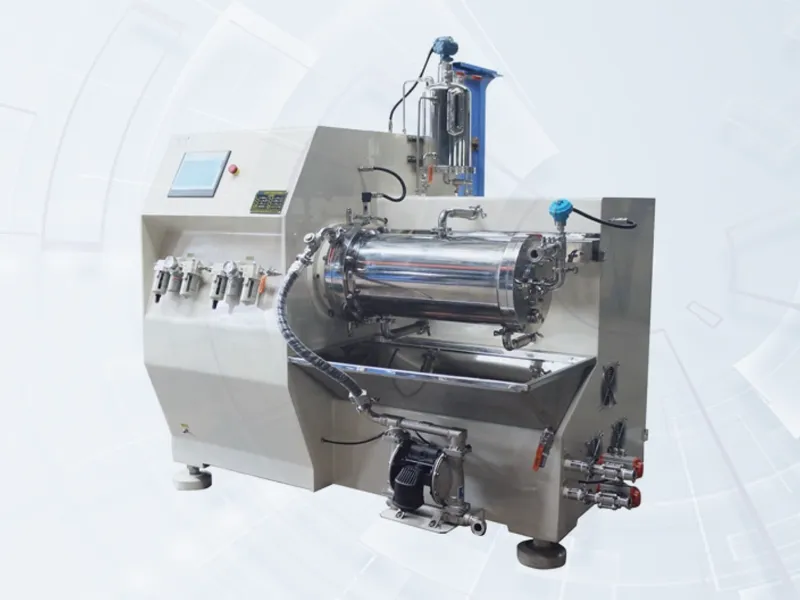
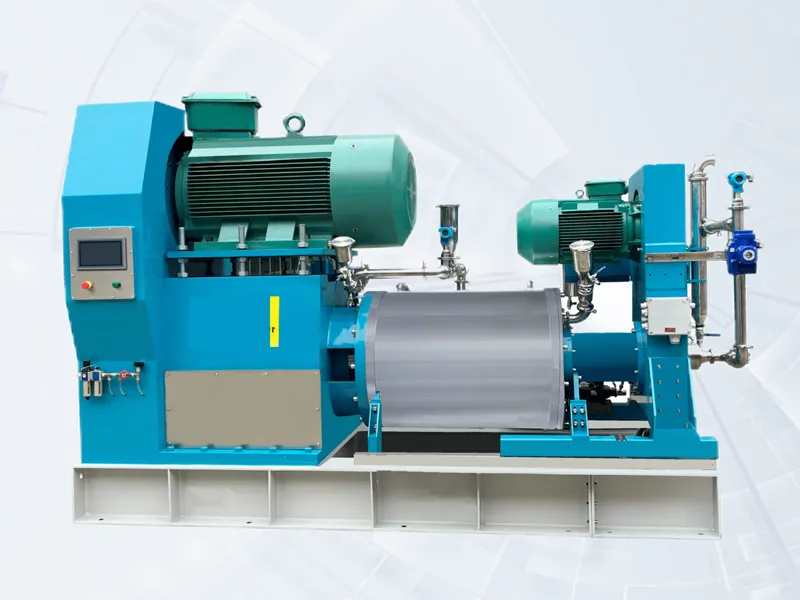
A modern nano grinding mill uses high-energy wet grinding and very small grinding beads to generate repeated impact, shear, and friction forces. Wet bead milling is particularly suitable for producing submicron and nano-scale particles because small media can create frequent particle-media interactions while the liquid phase helps control dispersion.
Reducing particle size increases specific surface area. As particles become finer, surface interactions become increasingly important, which can significantly change dispersion behavior and, at true nanoscale dimensions, may also alter optical, chemical, electrical, or other material properties.
This matters differently across industries.
In coatings and inks, finer and more uniform pigment dispersion can support color development, gloss, surface smoothness, and product consistency. However, some special-effect pigments require controlled rather than aggressive grinding because excessive shear can damage their structure.
In battery materials, particle-size control can influence slurry uniformity and downstream performance. Nano grinding systems for LFP, NMC, CNT and other battery materials also need to address contamination, temperature control, sealing, and consistent dispersion—not particle size alone.
This is why D50 should never be the only specification used when selecting a mill. D90 or D99, viscosity, agglomeration, stability, contamination limits, and final application performance can be equally important.
Grinding-media selection changes significantly as the target particle size decreases.
For micron-to-submicron processing, relatively larger beads can provide sufficient impact energy. For finer grinding, smaller beads create more contact points and more frequent interactions with small particles. Hiroshima Metal & Machinery notes that beads above 0.5 mm are suitable for reducing micron-size particles toward the submicron range, while finer processing requires smaller media.
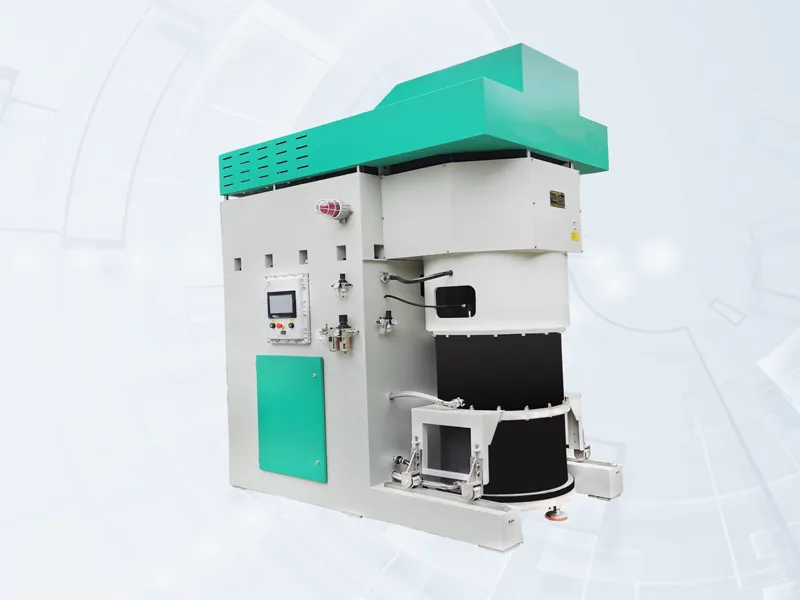
Advanced nano systems may operate with much smaller beads. For example, Infor's LPM vertical nano grinding machine is designed for approximately 0.03–0.3 mm grinding media and uses dynamic centrifugal separation rather than a conventional screen.
Smaller beads alone, however, do not guarantee better grinding.
As the target becomes finer, manufacturers must optimize:
Bead diameter and density
Rotor speed and energy density
Bead filling ratio
Slurry viscosity and solids content
Flow rate and residence time
Cooling efficiency
Dispersant formulation
Media separation efficiency
Trying to reach an unnecessarily fine particle size can increase energy consumption, processing time, media wear, and operating cost without delivering meaningful product improvement.
Nano grinding is justified when reducing particle size produces a measurable improvement in the final product or enables a specification that micron grinding cannot reliably achieve.
Typical applications include battery electrode materials, carbon nanotube dispersions, electronic ceramics, high-performance pigments, specialty chemicals, advanced coatings, and selected cosmetic formulations. Wet nano grinding is widely used where uniform submicron or nano-scale dispersion is an important part of product performance.
Before investing in a nano grinding mill, manufacturers should therefore ask one commercial question: What additional value does the smaller particle size create?
If a product performs correctly at 3–5 μm, pushing it below 500 nm may add unnecessary cost. If conductivity, transparency, stability, surface finish, or another critical property improves dramatically below a certain particle size, the additional processing complexity may be commercially justified.
Pilot testing with the actual formulation is usually the best way to establish this point.
The commonly recognized nanoscale is approximately 1–100 nm. In industrial milling terminology, "nano grinding" may also describe equipment and processes designed to reach the submicron range and continue toward true nanoscale dimensions.
Yes. Wet bead mills using small grinding media and sufficient energy density can produce submicron and nano-scale particle distributions for suitable materials. Actual achievable fineness depends on material properties, feed size, bead selection, process chemistry, mill design, and operating conditions.
Smaller beads provide more grinding-media contact points within the chamber and are better suited to interacting with increasingly fine particles. A nano grinding machine must also be capable of reliably separating these small beads from the finished slurry.
No. Finer is only better when the additional particle-size reduction improves the required product properties. Otherwise, micron grinding can provide higher process efficiency with lower grinding complexity and operating cost.
Start with the required D50/D90, throughput, viscosity, solids content, feed particle size, contamination limit, temperature sensitivity, and grinding-media size. Then verify performance through laboratory or pilot-scale testing before sizing a production system.
For industrial production, the best grinding specification is not the smallest number on a particle-size analyzer. It is the particle-size distribution that delivers stable product performance at an economically sustainable production cost. Infor's nano grinding solutions are designed for applications ranging from conventional micron and submicron processing to demanding nano-scale dispersion in battery materials, coatings, chemicals, ceramics, and other advanced materials.