Oct 30, 2025
Blog

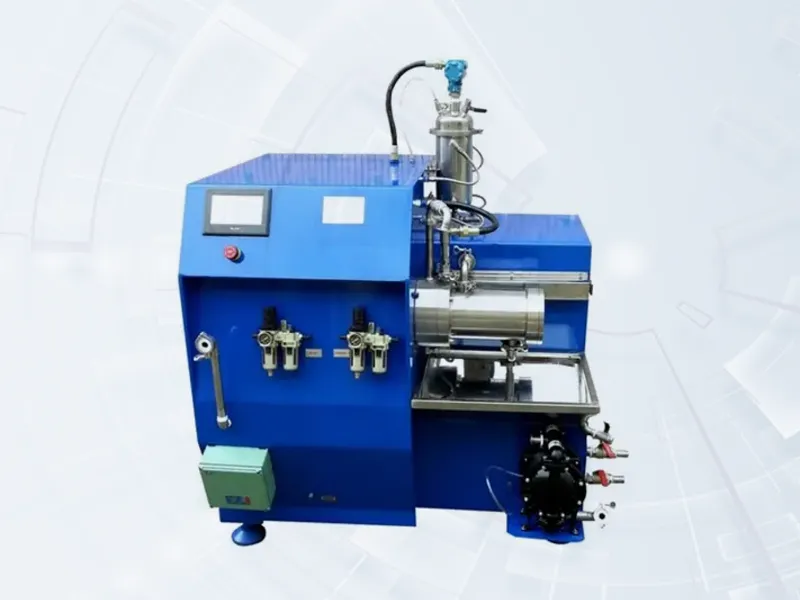
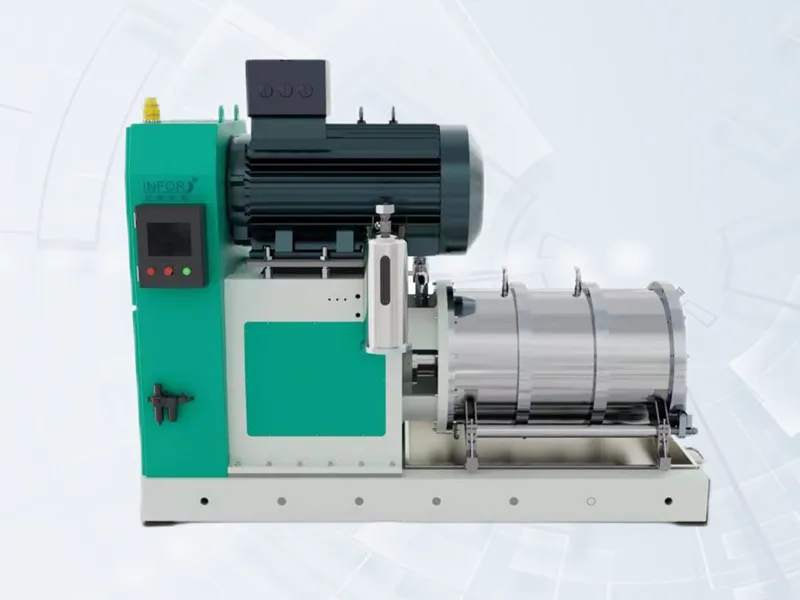
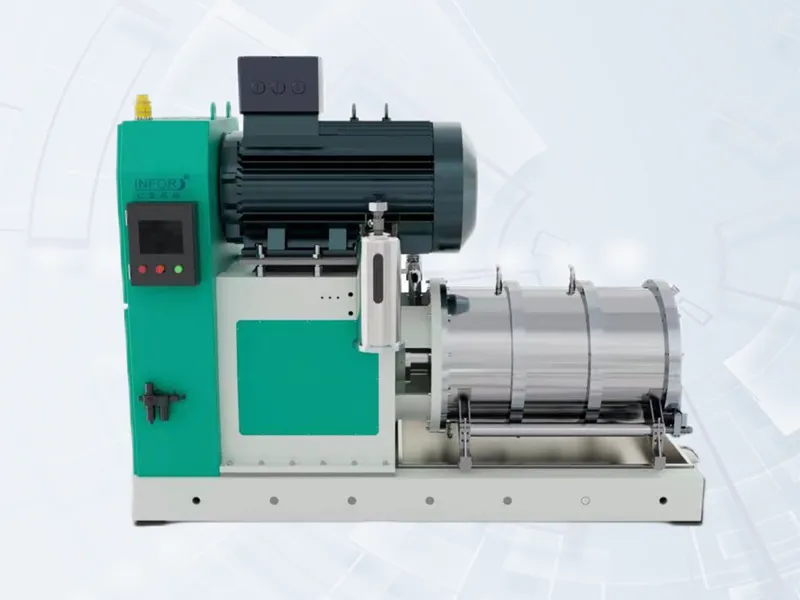
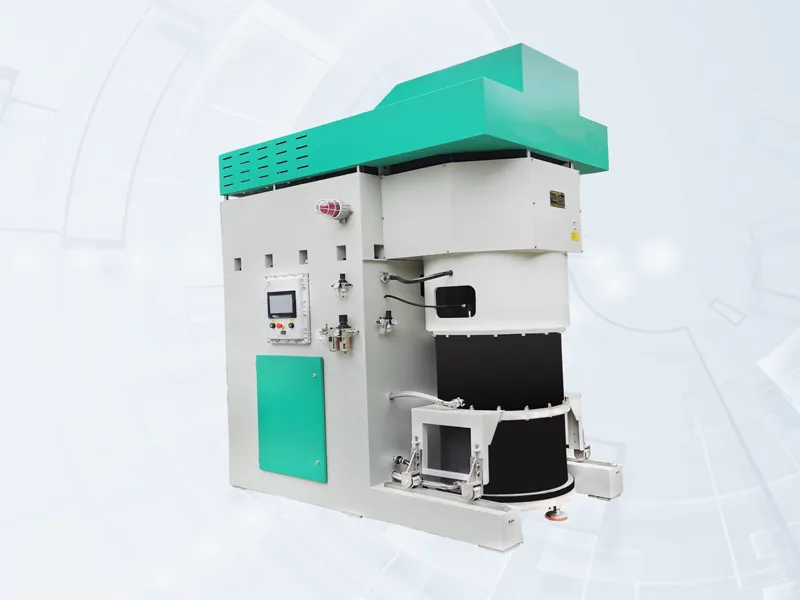
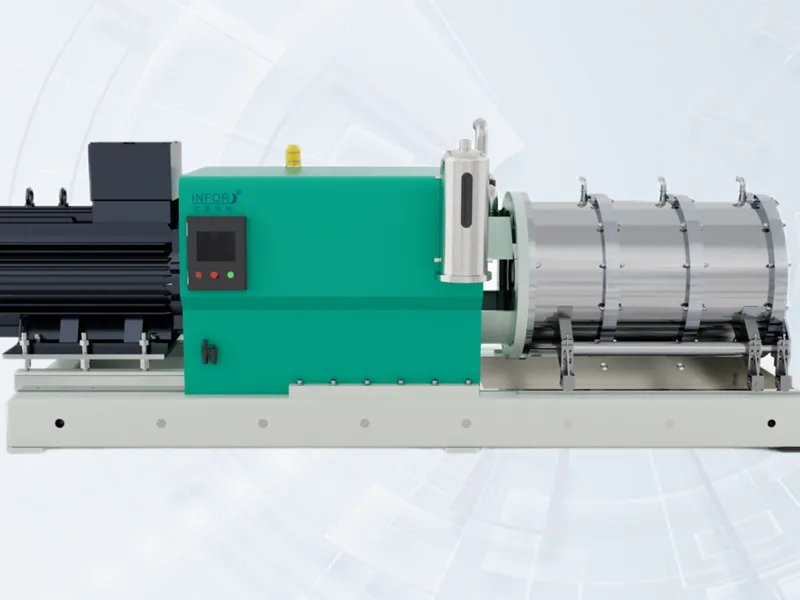
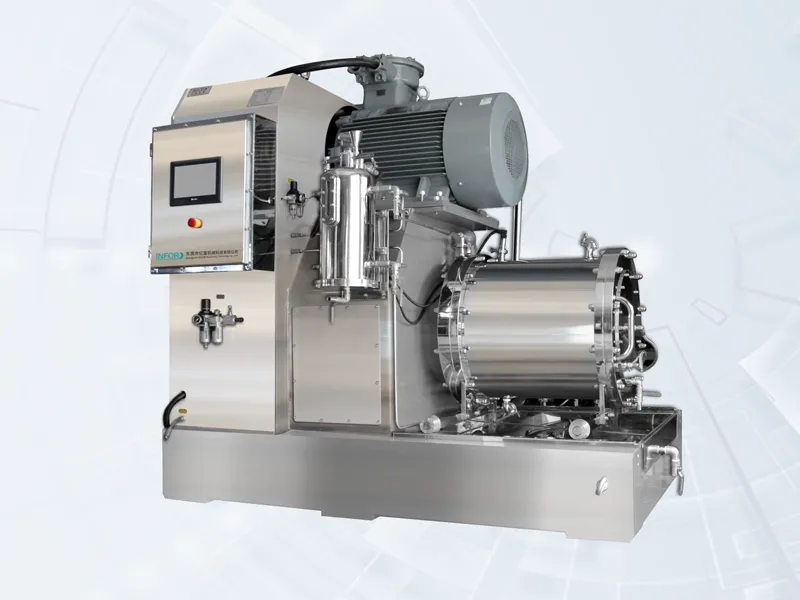
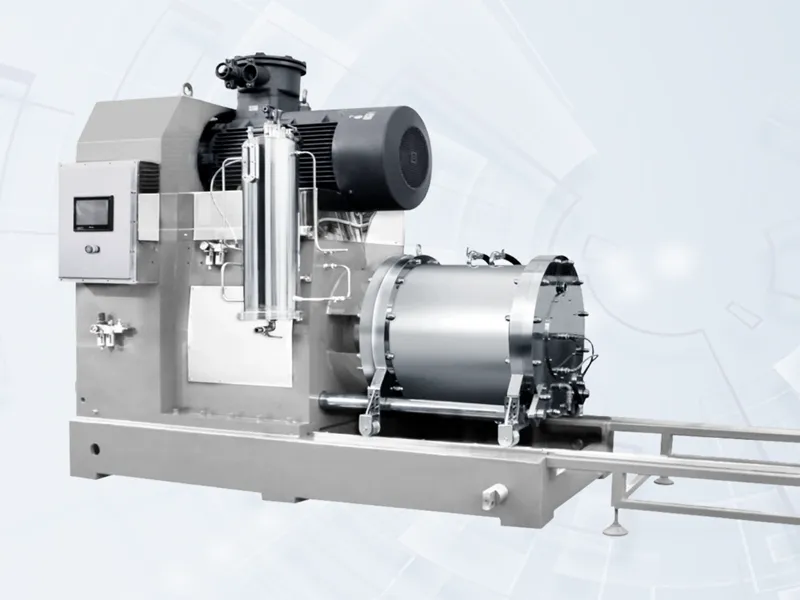
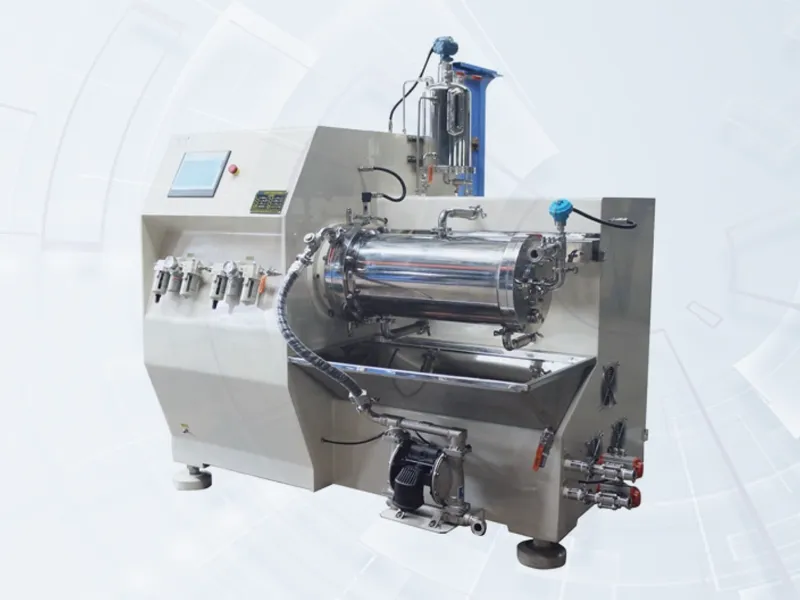
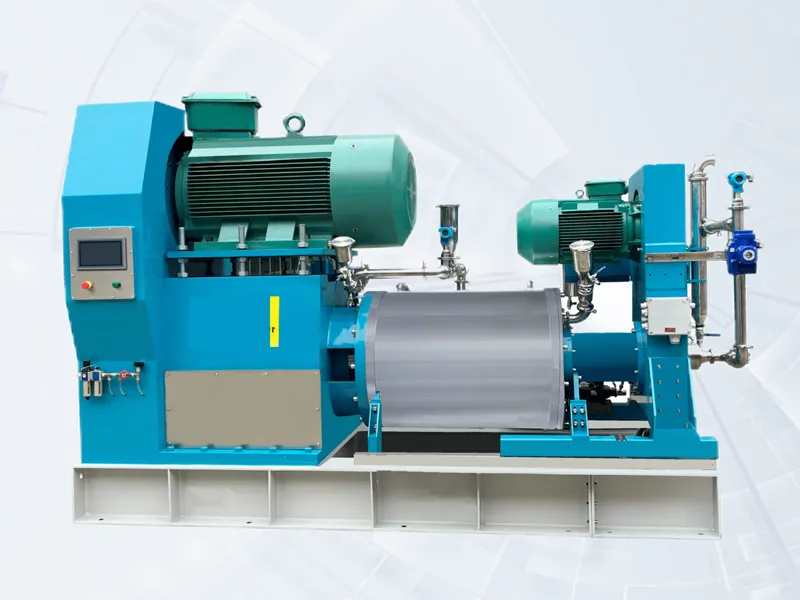

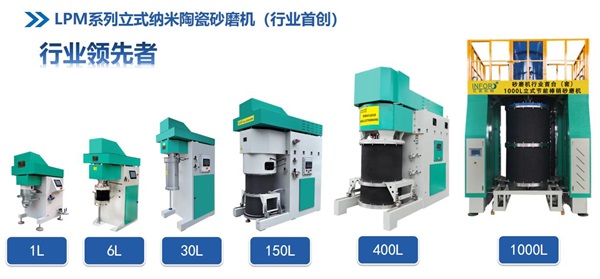
For high-viscosity slurries, neither mill orientation is automatically superior. A modern vertical sand mill can be particularly effective when nano-scale grinding, small beads, screenless separation, and clogging control are priorities. A properly engineered horizontal mill remains highly competitive for high-throughput processing where strong media circulation, effective cooling, and stable continuous flow are required.
The real selection factors are slurry rheology, solids content, target D90, grinding-media size, separator design, cooling capacity, and required production rate. Specialized horizontal mills are also available specifically for high-viscosity processing, so orientation should never be used as the only purchasing criterion.
High viscosity changes the grinding process because the slurry becomes more difficult to pump, circulate, cool, and separate from the grinding media. As particle size decreases, viscosity may rise further due to stronger particle interactions.
A modern vertical nano grinding mill can address these challenges through controlled bead circulation and, in some designs, dynamic or centrifugal media separation. Eliminating a conventional fine screen can be valuable when very small beads or difficult slurries create discharge restrictions.
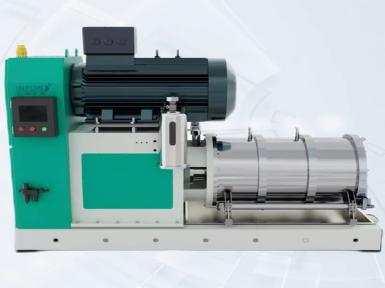
Traditional horizontal mills have a different advantage. Their horizontal chamber can maintain a relatively homogeneous media distribution and support high energy density and continuous circulation. Modern horizontal bead mills with dynamic gap separation are specifically engineered to process viscous products without excessive bead compression or pressure buildup.
Therefore, when comparing a vertical system with a China horizontal sand mill, buyers should evaluate the internal grinding and separation technology rather than the external machine layout alone.
Yes, but rotor and separator design usually matter just as much.
In a horizontal mill, beads are distributed along the chamber length while the agitator transfers energy into the media. This configuration can provide intensive and relatively uniform grinding, especially when processing in circulation or multi-pass mode.
In a vertical sand mill, gravity acts in the same direction as the vertical chamber arrangement and becomes part of the media-flow behavior. Advanced vertical designs use controlled centrifugal forces and internal circulation to prevent excessive bead settlement and maintain an active grinding zone.
For viscous slurries, the critical question is whether the machine can keep the media moving efficiently without creating dead zones, excessive chamber pressure, or unstable discharge.
A highly viscous continuous phase restricts the relative movement of particles and grinding beads. If the mill cannot transfer enough energy into active bead-particle collisions, grinding efficiency decreases.
This is why simply increasing rotor speed is rarely the best solution. Excessive speed can increase heat generation and component wear without producing a proportional improvement in particle-size reduction.
Heat management becomes increasingly important as viscosity and energy input rise.
High-viscosity products generate considerable friction during wet grinding. A production mill therefore needs sufficient cooling surface, effective heat transfer, and stable material circulation. Some modern high-viscosity bead mills use cooled rotor and stator surfaces specifically to improve temperature control during intensive processing.
Common causes include:
Excessively high slurry viscosity
Agglomerates larger than the separator gap
Incorrect grinding-media size
High solids concentration
Poor circulation or inadequate pumping
Material buildup around a conventional discharge screen
Separator technology is therefore especially important in a nano mill. Dynamic gap or centrifugal separation can reduce the risk of blockage compared with a very fine static screen, although the complete system must still be matched to the slurry. High-viscosity mills with specially designed large-area or dynamic separation systems are used specifically to maintain flow under demanding conditions.
For continuous industrial production, buyers should compare actual throughput at the required particle size, not maximum pump flow or nominal chamber volume.
For high-solids nano slurries requiring very small grinding media, a modern vertical nano grinding mill can be a strong option when its media-circulation and separation system is designed specifically for these conditions.
For high-viscosity coatings, inks, pastes, and chemical slurries requiring high throughput, an advanced horizontal mill may be equally suitable or better. Commercial horizontal systems are available specifically for high-viscosity and high-concentration processing, confirming that vertical orientation alone is not the deciding factor.
Evaluate the following under actual process conditions:
Feed and target particle size — Compare D50 and D90, not only the smallest achievable particle.
Viscosity at operating shear rate — A single laboratory viscosity value may not represent behavior inside the mill.
Solids concentration — Higher loading can dramatically change flow and heat generation.
Grinding-media diameter — Nano processing may require much smaller beads and a more advanced separation system.
Cooling performance — Confirm outlet temperature during sustained production.
Pressure and clogging behavior — Evaluate the separator under the actual formulation.
Specific energy consumption — Compare kWh per kilogram or ton at the required fineness.
Production throughput — Measure output after the material meets specification, not simply mill circulation rate.
A vertical sand mill should be selected when its grinding dynamics and separation technology offer a measurable process advantage for the formulation. A China horizontal sand mill should be selected when it provides better throughput, temperature control, maintenance economics, or production stability.
For difficult high-viscosity slurries, pilot testing remains the safest basis for scale-up. The best mill is ultimately the system that reaches the required particle-size distribution without excessive temperature, pressure, clogging, media wear, or energy consumption—and can reproduce that result continuously at production scale.