Dec 05, 2025
Company News

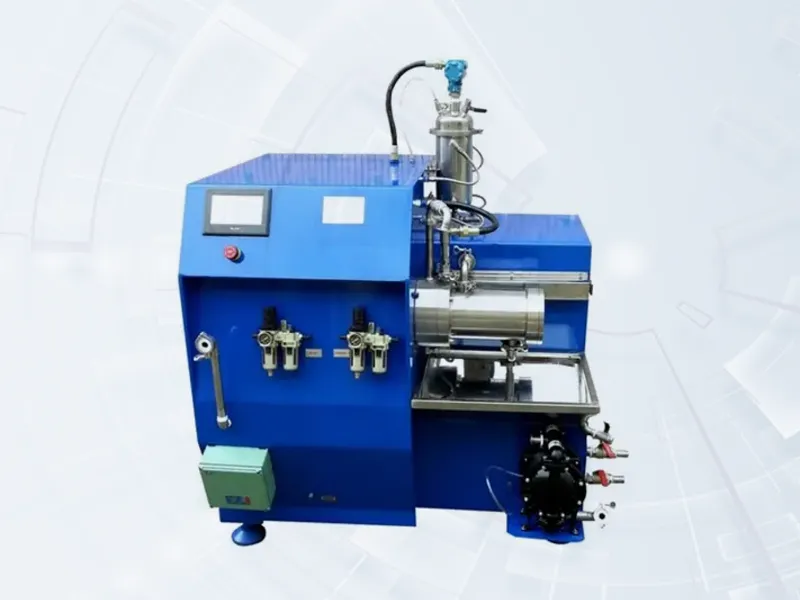
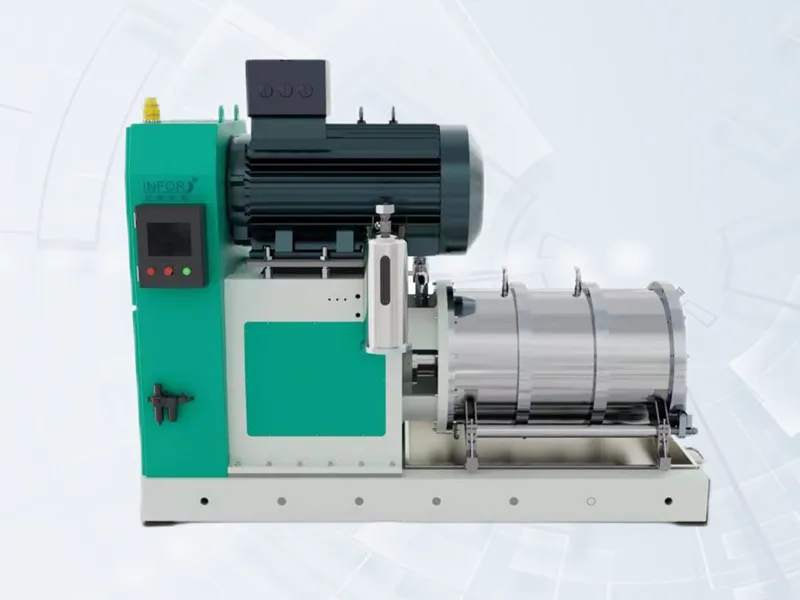
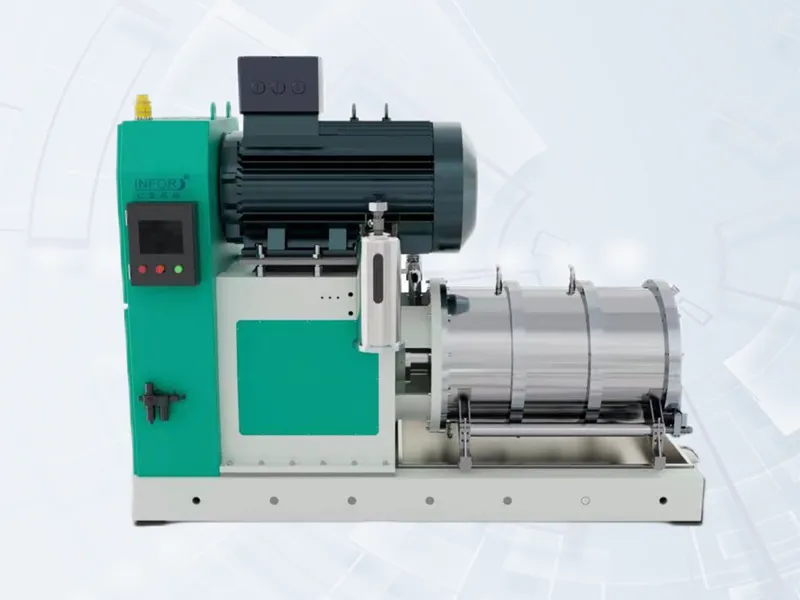
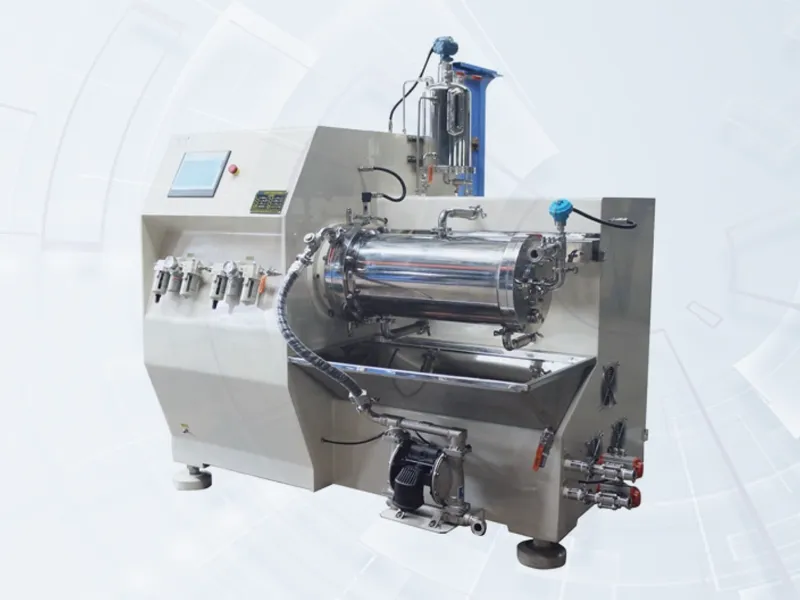
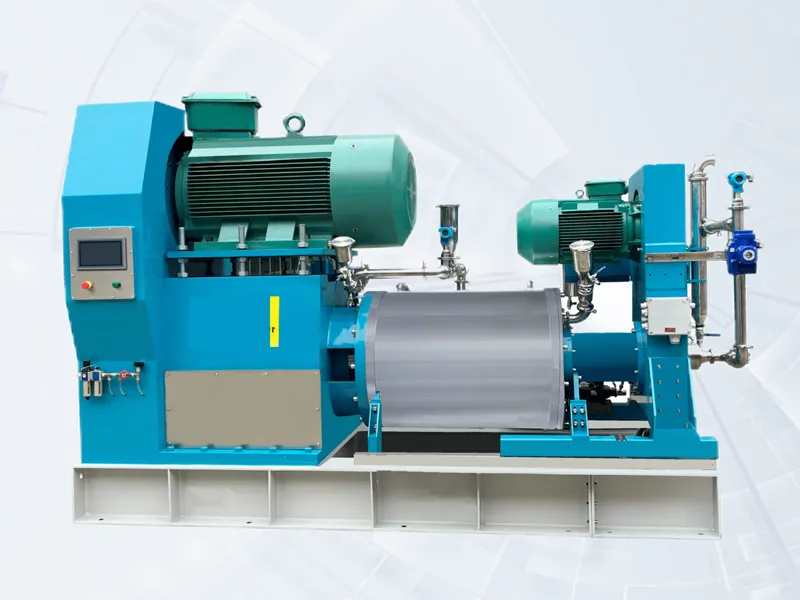

Selecting the right nano grinding machine starts with the material, not the mill size. Battery slurry usually prioritizes contamination control, temperature stability and nano-scale dispersion; coatings and inks require efficient pigment dispersion, viscosity adaptability and easy cleaning; ceramic materials demand strong wear resistance and reliable processing of hard particles.
For industrial production, compare the required D50/D90, slurry viscosity, solids content, grinding-media size, wetted-part materials, cooling capacity and actual throughput at the target fineness. A larger motor or chamber does not automatically mean better nano grinding performance.
Wet bead mills or sand mills are among the most widely used systems for producing submicron and nano-scale dispersions. The particles suspended in liquid are repeatedly exposed to impact, shear and friction generated by agitated grinding beads. Wet processing is particularly suitable for fine particle production because very small beads can be used effectively.
Common industrial configurations include:
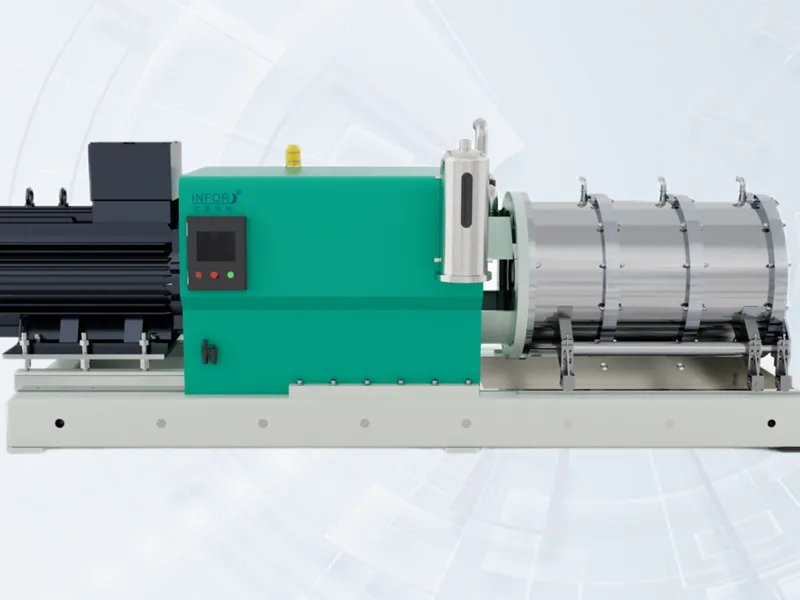
Horizontal bead mills: Proven for continuous, high-intensity grinding of coatings, inks, chemicals and many ceramic slurries.
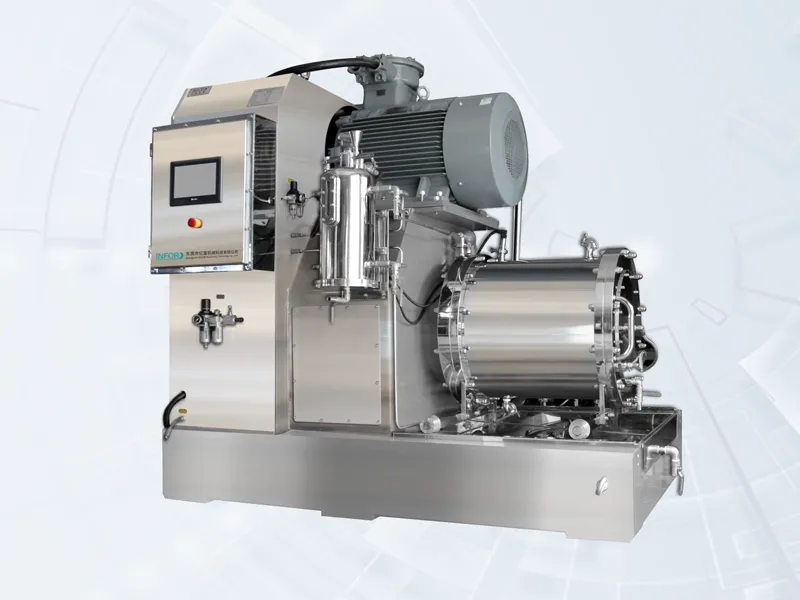
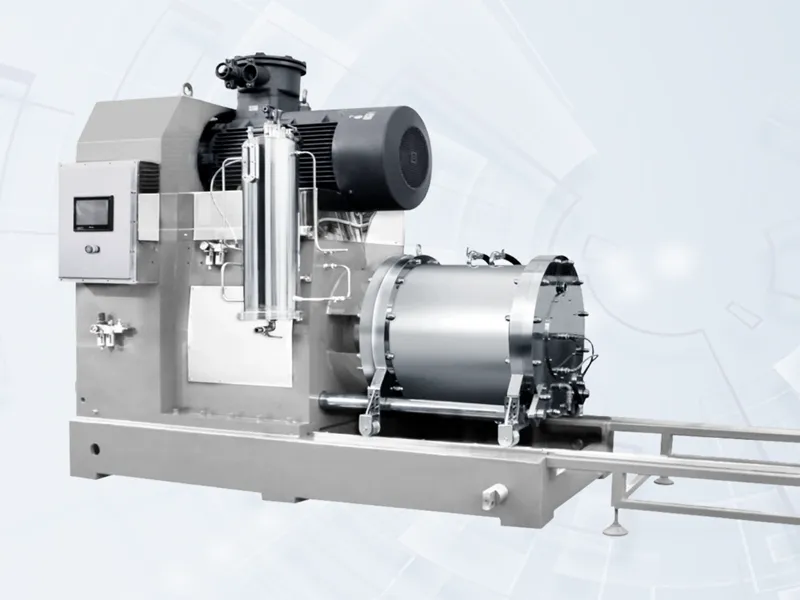
Rod-pin or pin-type mills: Provide high energy density and intensive bead-particle interaction, making them suitable for demanding nano materials.
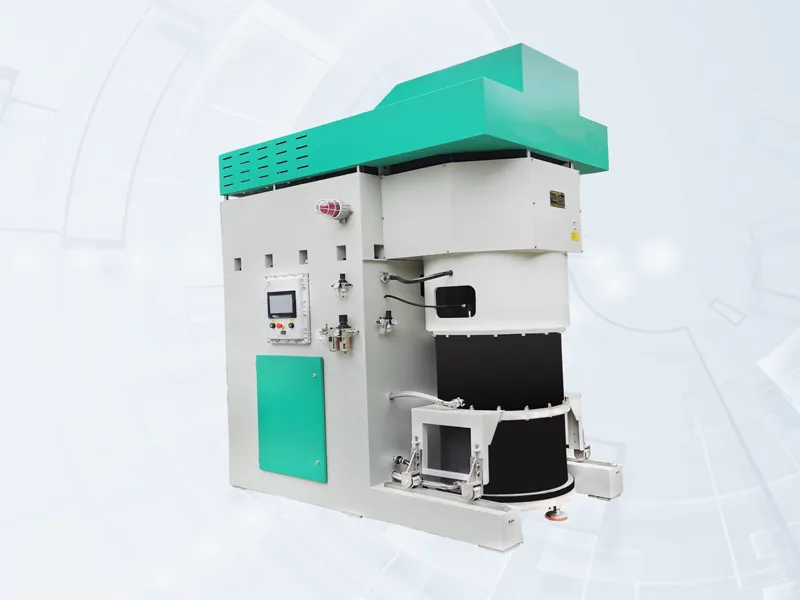
Vertical nano mills: Useful when very small grinding media, centrifugal separation and reduced screen-clogging risk are important.
Laboratory and pilot mills: Used to determine bead size, energy input, residence time and achievable particle-size distribution before production scale-up.
For example, Infor's NCP rod-pin series uses centrifugal discharge and is designed for high-flow nanomaterial processing, while its LPM vertical system can operate with grinding media from approximately 0.03 to 0.3 mm using a screenless separation concept.
The correct machine architecture depends on what happens inside the chamber under the actual slurry conditions—not simply whether the equipment is horizontal or vertical.
Battery materials place unusually strict requirements on grinding equipment. For cathode and anode materials, conductive agents and separator coating slurries, the mill must control particle size without introducing unacceptable contamination or excessive heat.
Important selection criteria include:
Low metal contamination. Battery-grade materials may require ceramic or other wear-resistant non-metallic contact parts. Infor identifies ceramic, polyurethane and tungsten-carbide options for battery-material processing where contamination control is critical.
Temperature control. High-energy grinding converts part of the input power into heat. Effective chamber cooling becomes important for maintaining stable slurry properties during continuous production.
Stable processing of high-viscosity slurry. Electrode and diaphragm coating formulations can become difficult to circulate as solids loading increases. Pump capacity, rotor structure, flow path and separator design therefore need to be evaluated together. Infor's battery coating slurry series combines a rod-pin grinding structure, centrifugal discharge and double-layer chamber cooling for this type of application.
Reliable nano dispersion. Materials such as CNT conductive slurries can require deagglomeration rather than aggressive destruction of the primary particle structure. Process parameters should therefore be established through material testing instead of simply maximizing rotor speed.
For battery production, purity and slurry stability can be just as important as the final particle-size number.
Coatings and inks usually require a nano grinding machine capable of achieving narrow particle-size distribution while maintaining color strength, gloss, viscosity and formulation stability.
For these applications, consider:
Compatibility with water- or solvent-based formulations
Efficient cooling at high circulation rates
Fast cleaning when colors or products change
Wear-resistant chamber and rotor materials
Stable performance across different slurry viscosities
Ceramic slurries introduce a different challenge. Materials used for electronic ceramics, MLCCs, ceramic substrates and related products can be highly abrasive, while final product performance depends strongly on powder purity and particle-size distribution. This makes chamber material, rotor wear and grinding-media quality major selection factors.
A ceramic-lined or all-ceramic grinding zone can be valuable when metallic contamination must be minimized. Infor's dual-power nano mill, for example, uses an all-ceramic grinding chamber and supports very small media through meshless separation.
The same mill should not automatically be specified for battery slurry, printing ink and electronic ceramics simply because all three require nano-scale processing. Their wear, viscosity, contamination and thermal requirements can be very different.
These three decisions have a major influence on both product quality and operating cost.
Smaller beads generally provide more bead-particle contact points and are important when moving toward increasingly fine particle sizes. Commercial nano bead-mill systems can use media well below 0.1 mm; for example, NETZSCH specifies 30–300 μm media for its Zeta RS nano mill, while Infor's LPM is designed for approximately 0.03–0.3 mm media.
The smallest bead is not automatically the best bead. Media diameter must match feed particle size, material hardness, slurry viscosity, separator capability and required grinding energy.
For conventional coatings, suitable metallic or wear-resistant structures may provide an economical solution. For battery materials and high-purity ceramics, zirconia, silicon carbide or other contamination-resistant materials can be preferable.
Grinding-media material matters as well. Zirconia media are widely available in very small sizes for nano processing, with differences in density, hardness and wear characteristics affecting energy transfer and contamination.
Do not select capacity from chamber liters alone.
Production sizing should be based on kg/h or L/h at the required D90, together with the number of passes, specific energy consumption and allowable slurry temperature. A 30 L mill that reaches specification in one controlled circulation process can be more productive than a larger machine requiring repeated passes.
Pilot testing provides the most reliable basis for scale-up because viscosity and grinding behavior can change significantly as particle size decreases.
Modern wet bead mills can process suitable materials from micron sizes into the submicron and, in some applications, nanometer range. Actual results depend on the feed material, bead size, mill design, dispersion chemistry and operating parameters.
A bead mill is a type of grinding and dispersion machine. When engineered to use sufficiently small media and provide the required energy density and bead separation, it can be used as a nano grinding machine for wet nano-scale processing.
Nano grinding involves intensive energy input. Without adequate heat removal, slurry temperature can rise and affect viscosity, dispersants, binders or temperature-sensitive materials. Cooling capacity should therefore be evaluated under real production load rather than only from nominal machine specifications.
Provide the equipment supplier with the feed particle size, target D50/D90, viscosity, solids content, material hardness, solvent system, contamination limit and required production rate. Material testing can then determine suitable bead size, rotor speed, circulation rate and mill configuration.
For battery slurry, coatings and ceramic materials, the best nano grinding system is the one that repeatedly reaches the required particle-size distribution while controlling contamination, temperature, wear and energy consumption. Selecting equipment around actual process data rather than nominal mill capacity reduces scale-up risk and gives a far more realistic picture of production cost.