Dec 20, 2025
Company News

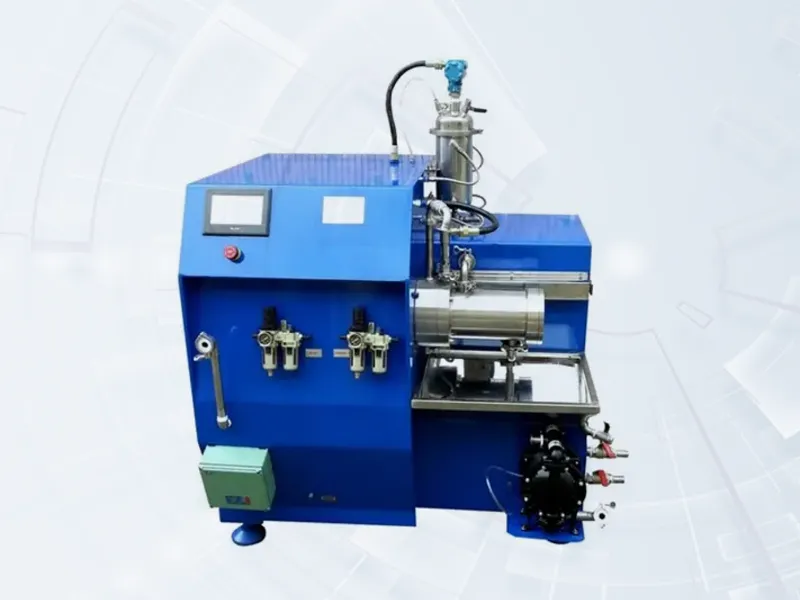
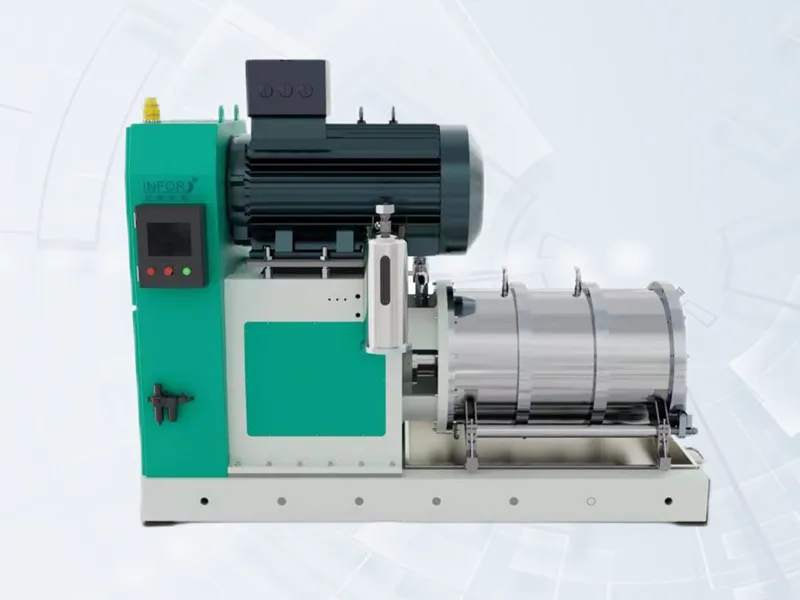
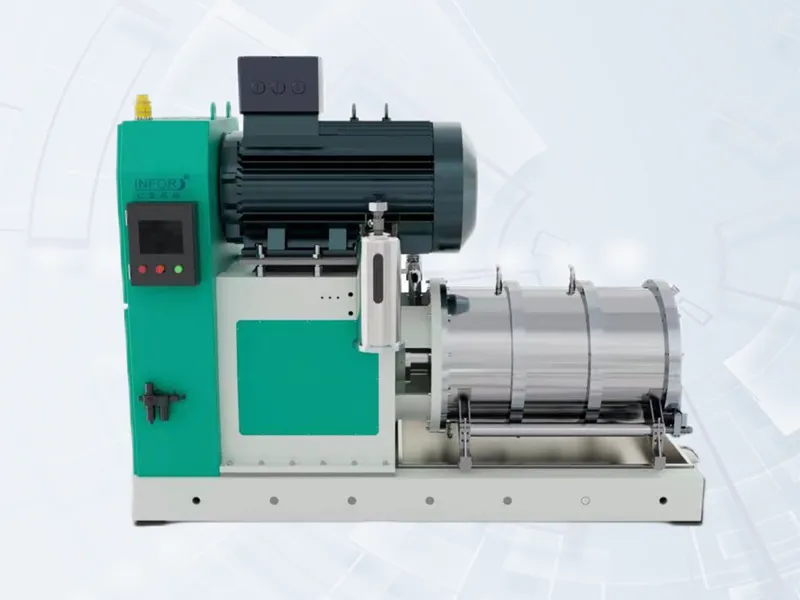
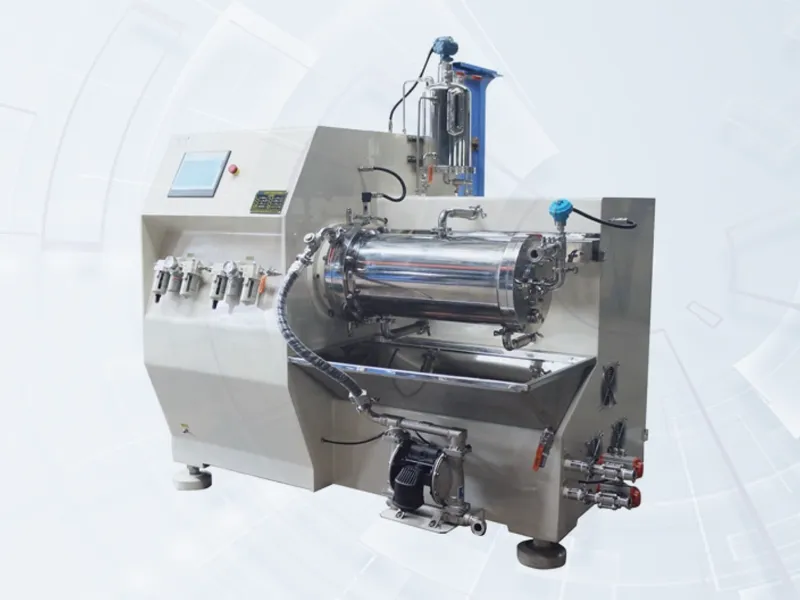
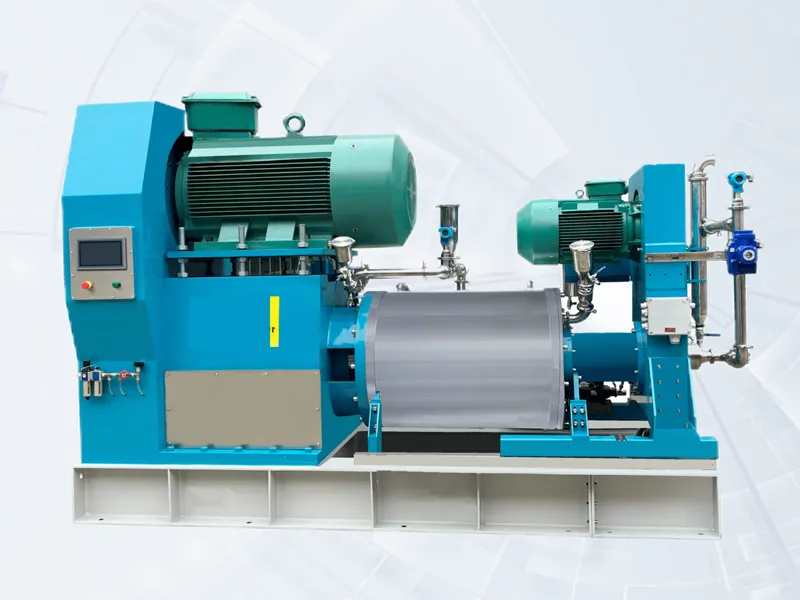

For industrial wet grinding, horizontal sand mills remain a strong choice for conventional coatings, inks, pigments, and general chemical processing, while modern vertical sand mills can offer important advantages in nano grinding, battery materials, high-throughput production, and applications where screen clogging or fine grinding media create operational problems.
The better system therefore depends less on orientation alone and more on particle-size target, slurry properties, grinding-media diameter, separation technology, energy consumption, and maintenance requirements.
The main difference is the orientation of the grinding chamber and how material, grinding media, and centrifugal forces behave inside it.
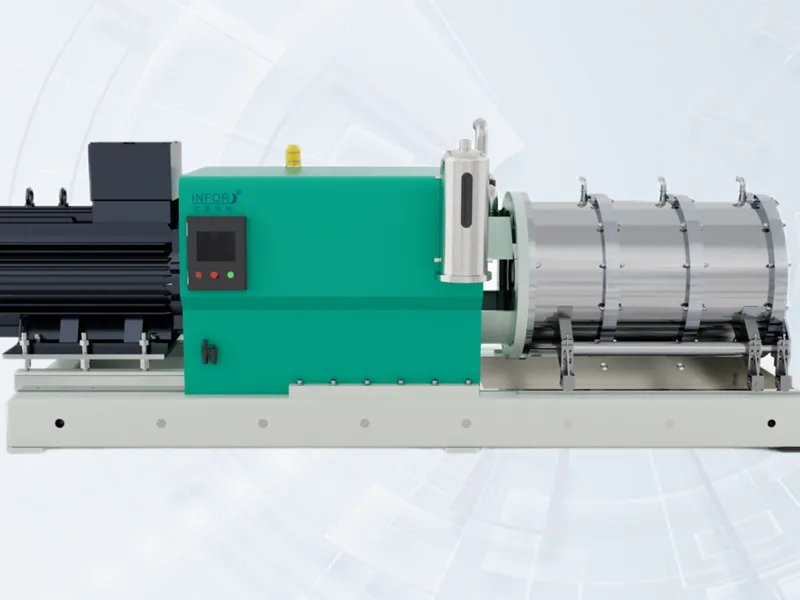
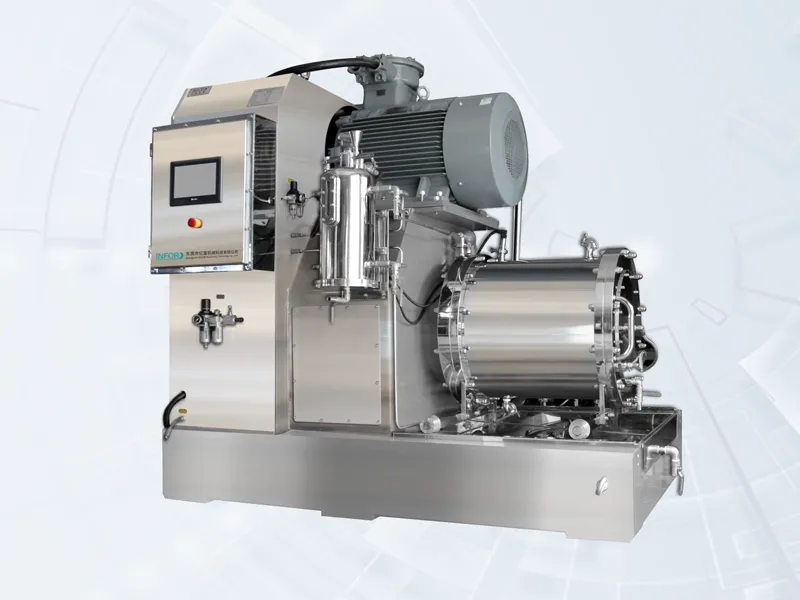
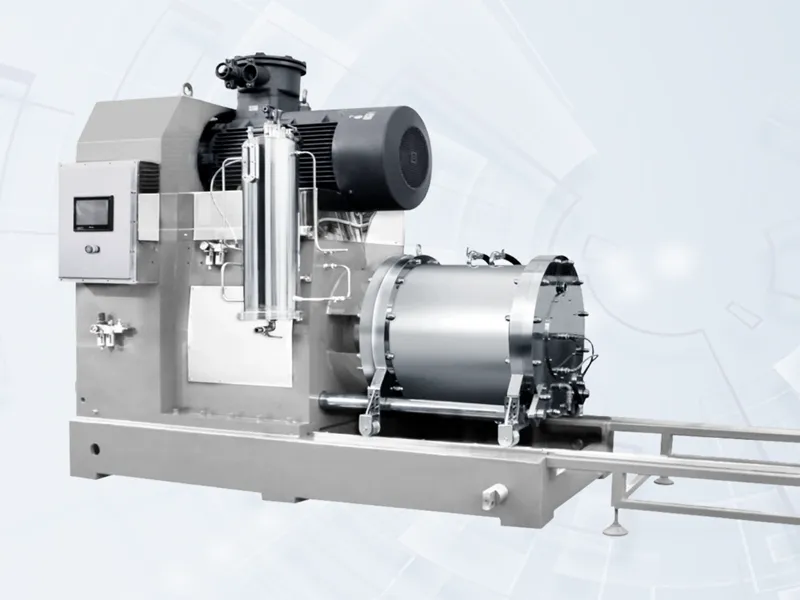
A horizontal sand mill uses a horizontally arranged chamber with a rotating disc, pin, or turbine structure. This configuration is widely established for continuous wet grinding and provides intensive shear and impact forces, making it effective for paints, inks, pigments, and chemical slurries.
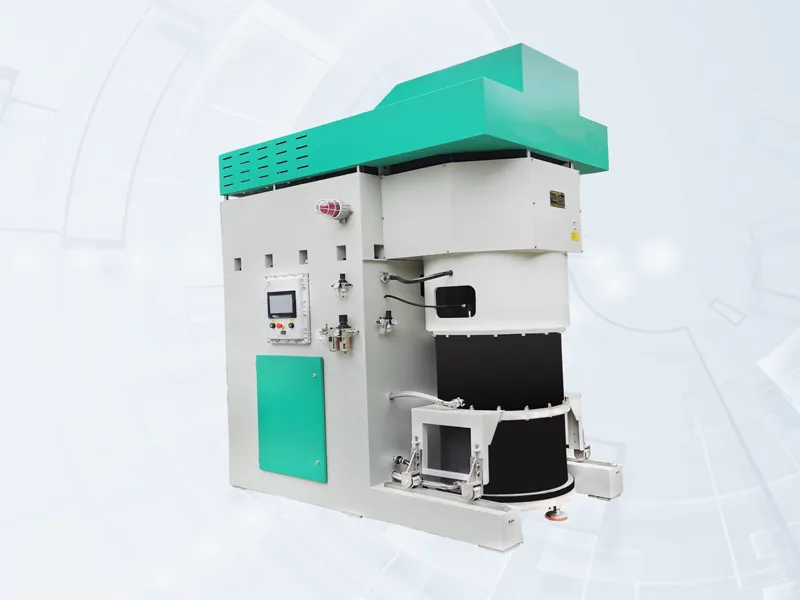
A vertical sand mill uses a vertically arranged grinding chamber. In advanced designs, gravity and centrifugal force help control media circulation and material movement through the grinding zone. Modern vertical systems may also use dynamic centrifugal separation instead of a conventional discharge screen.
For buyers evaluating a China horizontal sand mill against a modern vertical machine, the separator design is especially important. Two mills with different separation technologies can perform very differently even if their installed motor power and chamber volume are similar.
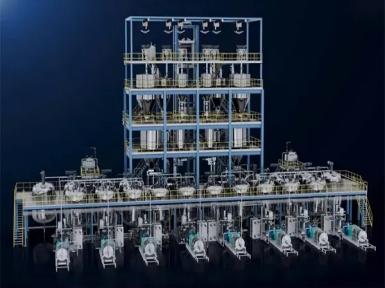
Traditional horizontal mills have long been favored for fine grinding because their chamber configuration provides intensive media-particle interaction and stable continuous processing. They can achieve relatively narrow particle-size distributions when bead size, rotor speed, residence time, and slurry viscosity are properly matched.
However, orientation alone does not determine nano-grinding performance.
A modern vertical mill equipped with efficient internal circulation and centrifugal media separation can operate with very small grinding beads. For example, Infor's LPM vertical nano ceramic sand mill is designed for grinding media down to 0.03 mm and uses dynamic centrifugal discharge without a screen.
This can be particularly valuable when producing battery materials, electronic materials, or other high-value slurries requiring a narrow nanoscale distribution.
In practice, compare mills using measurable production data:
Target D50 and D90 particle size
Throughput at the required fineness
Specific energy consumption
Maximum allowable material temperature
Grinding-media size and filling rate
Number of passes required
Particle-size stability during continuous production
The machine that reaches the required specification with fewer passes and lower total operating cost is usually the better industrial solution.
Maintenance is often where the real production difference appears.
Traditional screen-based bead separation can become a bottleneck when processing high-solid, highly viscous, or extremely fine materials. Smaller beads require tighter separation gaps, increasing the importance of preventing blockage and maintaining stable discharge. Screen-related maintenance can also reduce effective production time.
Screenless centrifugal separation offers another approach. Infor's vertical LPM system, for example, uses dynamic centrifugal discharge and is designed to prevent screen clogging and grinding-bead leakage.
Grinding-media consumption should also be evaluated carefully. High rotor speed does not automatically mean better economics. Excessive energy density can increase bead, rotor, and liner wear. The optimum mill should balance grinding intensity with bead life, component wear, cooling demand, and production capacity.
Battery materials: For lithium battery cathode/anode materials, conductive agents, silicon-carbon materials, and other nano-scale slurries, vertical or advanced screenless nano sand mills can be attractive because small grinding media, contamination control, temperature management, and stable nanoscale processing are critical. Infor specifically develops sand mill systems for battery material production and nano-scale processing.
Coatings and inks: Horizontal mills remain highly practical for pigment dispersion, color development, resins, inks, and general coating production. Easy cleaning, viscosity adaptability, wear resistance, and reliable heat removal are particularly important when frequent color changes are required.
Fine chemicals: Either configuration can work well. Selection should be based on viscosity, abrasiveness, heat sensitivity, contamination limits, required particle size, and annual production volume rather than choosing solely by mill orientation.
For large industrial projects, pilot testing with the customer's actual formulation is far more reliable than comparing equipment only from specification sheets.
Neither is universally better. Horizontal mills are proven, flexible solutions for many conventional wet-grinding applications, while advanced vertical mills can provide significant advantages for nano grinding, fine-media operation, reduced clogging, and continuous high-volume production.
Both can produce fine or nano-scale particles when correctly engineered. Final fineness depends on grinding-media diameter, energy density, rotor design, material properties, residence time, and separation technology—not simply whether the chamber is horizontal or vertical.
Clogging is commonly associated with fine particles, high viscosity, high solids concentration, inappropriate flow conditions, or demanding bead-separation requirements. For difficult nano-grinding applications, a screenless centrifugal separation design can eliminate the screen as a potential blockage point.
Start with the required particle-size distribution and annual capacity, then evaluate slurry viscosity, solids content, bead size, cooling requirements, contamination limits, maintenance frequency, energy consumption, and total operating cost.
For manufacturers comparing a China horizontal sand mill with a new-generation vertical sand mill, the most useful decision is not simply "horizontal versus vertical." Compare the complete grinding system under your actual material and production conditions.
Infor provides horizontal, vertical, and specialized nano grinding solutions for coatings, chemicals, battery materials, ceramics, and other demanding applications, allowing the grinding process to be selected around the material rather than forcing the material to fit a standard machine configuration.