Mar 28, 2026
Blog


Walk through any advanced manufacturing facility today, and you will hear the same conversation: how do we make particles smaller, more uniform, and do it without burning through our energy budget? Whether the final product goes into an electric vehicle battery, a ceramic capacitor, or a can of automotive paint, the grinding and dispersion stage often determines whether the product performs as promised—or falls short.
This is where the vertical bead mill has carved out a distinct place for itself. Once considered a niche alternative to horizontal grinding systems, vertical bead mills are now the preferred choice in a growing number of industries. The reason is fairly straightforward: the vertical configuration solves several persistent problems that horizontal mills struggle with, particularly around energy consumption, maintenance downtime, and the ability to handle ever-finer particle size targets.
Understanding why this shift is happening requires looking beyond the equipment spec sheet—and into what actually matters on the production floor.
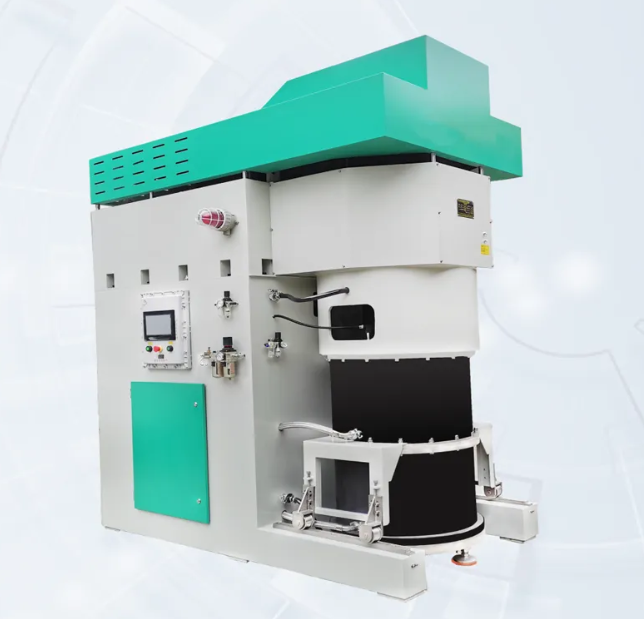
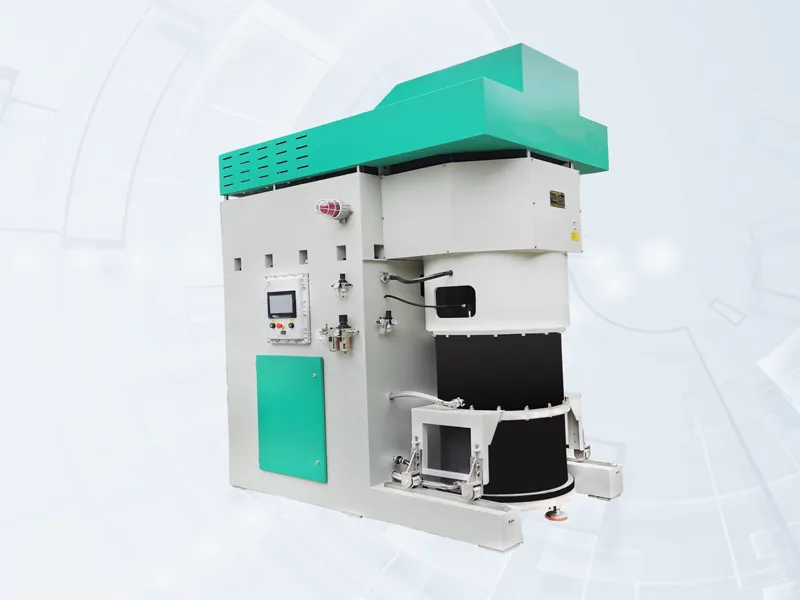
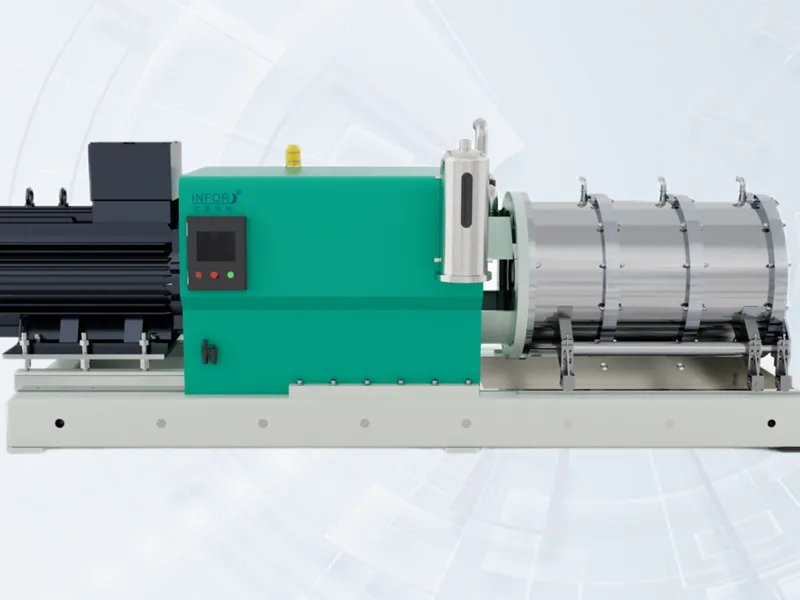
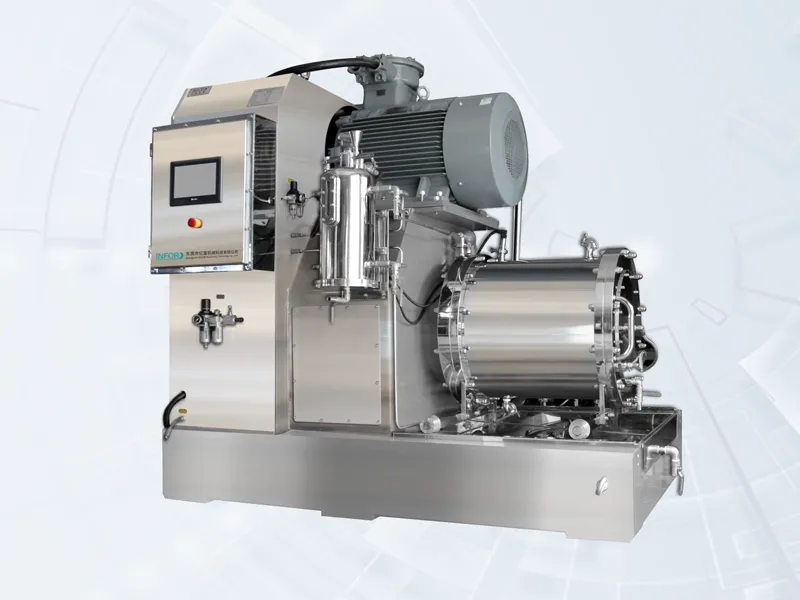
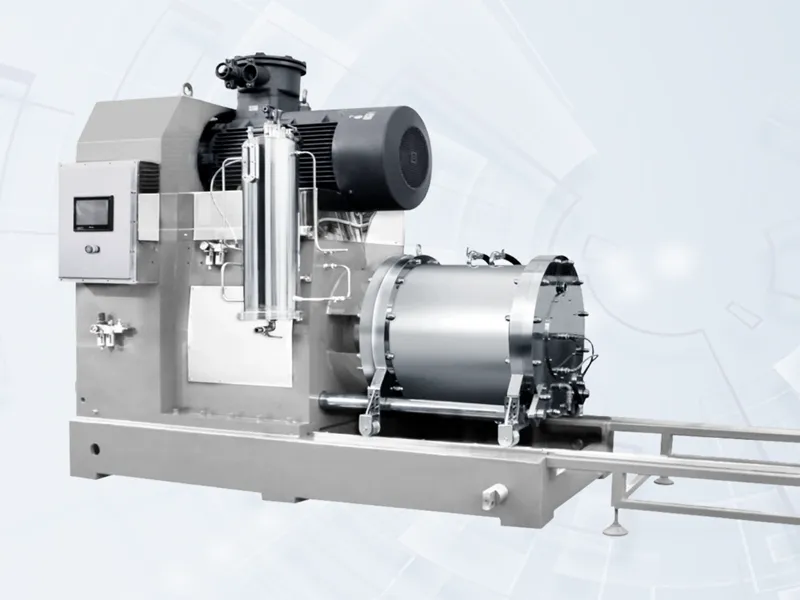
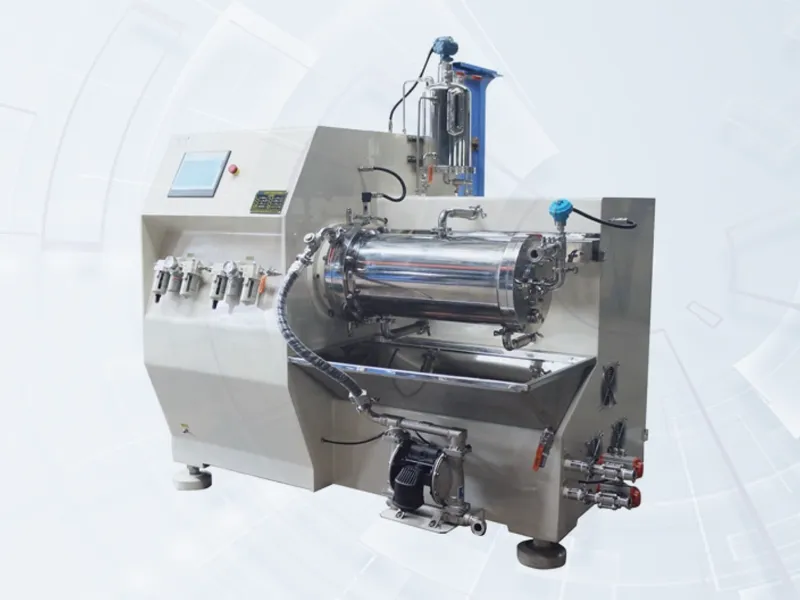
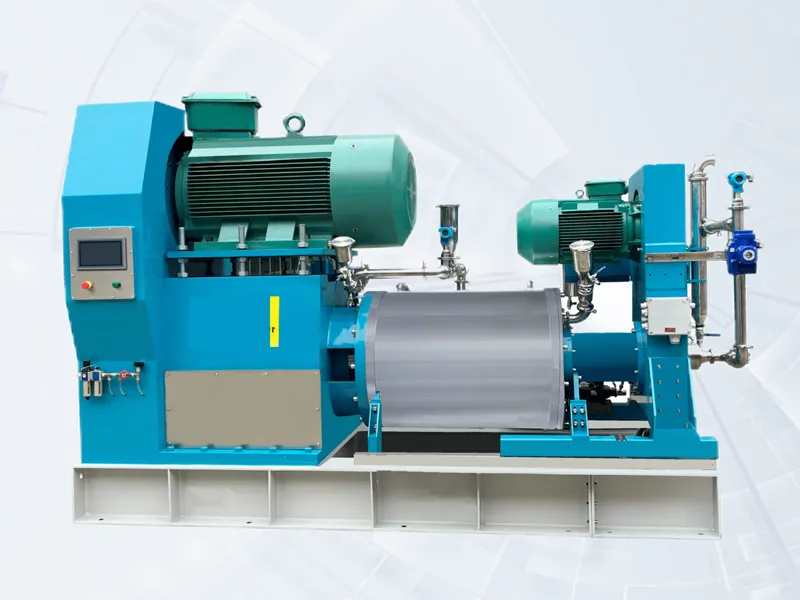
At first glance, a vertical bead mill might seem like a simple variation on the horizontal design. The grinding chamber is upright rather than lying flat. The agitator shaft enters from the top or bottom. Grinding media—typically zirconia beads—fill the chamber, and material passes through, getting crushed and dispersed by the high-speed agitation.
But that vertical orientation does something subtle and important. Gravity works with the process rather than against it. In a vertical bead mill, the grinding media settle naturally toward the bottom of the chamber, while the rotor provides upward centrifugal force. This creates a continuous internal circulation: material is pulled downward by gravity and pushed upward by the rotor, cycling through the grinding zone multiple times before discharge. The result is more thorough grinding with fewer dead zones—areas where material can stagnate without being properly processed.
This gravity-assisted flow also translates into energy savings. Compared to horizontal systems that rely entirely on pumping to move material through the chamber, vertical mills can reduce pumping energy requirements. Several manufacturers and industry sources report that vertical bead mills consume roughly 20–30% less energy per unit of output than their horizontal counterparts. For a facility running multiple shifts year-round, that difference adds up.
There is also the matter of the mechanical seal. Horizontal bead mills require a robust seal where the agitator shaft enters the grinding chamber—a point of frequent maintenance. Vertical mills, by design, avoid this problem because the shaft orientation and the absence of a pressurized seal at the grinding zone simplify the overall structure. Fewer mechanical complications mean fewer unexpected shutdowns.
The real story of the vertical bead mill is told through its applications. These machines are not generalists; they have become essential in fields where particle size distribution directly dictates product performance and market value.
Perhaps no industry has driven vertical bead mill adoption more than lithium-ion battery manufacturing. Cathode materials like lithium iron phosphate (LFP) and ternary materials (NCM), as well as anode materials including graphite and silicon-carbon composites, all require grinding to nanometer-scale uniformity. The reason is simple: uneven particle distribution in electrode materials leads to inconsistent charge and discharge behavior, reduced energy density, and shorter cycle life. Modern nano grinder machine solutions help achieve the sub-micron particle sizes necessary for these demanding applications, ensuring uniformity and performance.
Vertical bead mills handle these materials effectively because they can use extremely fine grinding media—often in the range of 0.03 mm to 0.3 mm—and achieve the narrow particle size distribution that battery manufacturers demand. The centrifugal separation system used in many modern vertical mills allows these tiny beads to operate without screen blockage, a common headache with horizontal designs.
In the production of multi-layer ceramic capacitors (MLCCs) and advanced structural ceramics, contamination is the enemy. Even trace amounts of metal ions from the grinding chamber can compromise dielectric properties or sintering behavior. This has driven demand for all-ceramic vertical bead mills, where every surface in contact with the material—the grinding chamber, agitator shaft, dispersion discs, and separation components—is made from high-performance ceramics like zirconia or silicon carbide.
The vertical configuration also suits the production volumes typical of electronic materials manufacturing. These are often high-value, moderate-volume products where batch flexibility matters more than raw throughput.
This is the traditional stronghold of bead milling, and vertical mills continue to play a major role here. For applications like automotive coatings, digital printing inks, and ceramic inks, achieving consistent color intensity and dispersion stability depends on uniform particle size. Vertical bead mills offer an additional operational advantage in these settings: faster color changeovers. Because the grinding chamber is upright and often features a bottom-discharge design with top access, cleaning between batches takes significantly less time than with horizontal systems. Industry reports indicate that a single operator can complete a color change on a vertical mill in well under an hour, compared to several hours for horizontal equipment.
If you are considering a vertical bead mill for your operation, there are several factors worth examining closely—beyond just the price tag.
Separation technology is arguably the most critical design element. Traditional screen-based separation systems are prone to clogging, especially when using very small grinding beads. Many modern vertical mills use a dynamic centrifugal separation system instead, where the product outlet is designed so that only particles that have reached the target fineness can exit, while coarser material and grinding media are retained for further processing. This "no-screen" approach reduces maintenance frequency and extends the usable life of expensive zirconia beads.
Cooling capacity matters more than many buyers initially realize. High-speed grinding generates substantial heat, and for temperature-sensitive materials—pharmaceutical compounds, certain polymers, some battery precursors—a well-designed cooling jacket can make the difference between a stable process and a rejected batch. Look for mills with double-walled grinding chambers and adequate coolant flow paths.
Material compatibility should be assessed early. Standard stainless steel chambers work fine for many applications, but if your product is acidic, abrasive, or sensitive to metal contamination, you may need polyurethane-lined or all-ceramic options.
Scalability is another practical consideration. Ideally, the manufacturer should offer a consistent platform across lab, pilot, and production scales, so that process parameters developed during R&D can be transferred directly to manufacturing without extensive re-optimization.
The global market for vertical media mills continues to grow steadily, driven largely by demand from battery manufacturing, advanced ceramics, and specialty chemicals. As product specifications get tighter—whether it is a coating that needs to last a decade on a wind turbine, or a battery electrode that must survive thousands of charge cycles—the role of precision grinding equipment becomes ever more central to manufacturing competitiveness. Partnering with a reliable sand mill manufacturer can help ensure consistent equipment quality and technical support across all production scales.
For production managers and process engineers, the vertical bead mill offers a combination that is hard to ignore: lower energy consumption, simpler maintenance, and the ability to achieve the sub-micron particle sizes that modern materials demand. It is not the right answer for every application—very high-viscosity materials or extremely high-throughput operations may still favor horizontal designs—but for an expanding range of industries, the vertical configuration has become the default choice.
For more information about vertical bead mill solutions—including the LPM series designed for nano-scale grinding applications—visit our product page or contact our technical team to discuss your specific material processing requirements.
Q: How does a vertical bead mill differ from a horizontal bead mill in terms of grinding efficiency?
A: Vertical bead mills benefit from gravity-assisted material flow, which creates natural internal circulation through the grinding zone. The grinding media settle downward while the rotor provides upward centrifugal force, resulting in more thorough grinding with fewer dead zones. This design typically achieves higher energy efficiency—often 20–30% lower energy consumption than comparable horizontal mills—and produces a narrower particle size distribution.
Q: What particle size range can a modern vertical bead mill achieve?
A: Modern vertical bead mills can reliably achieve particle sizes in the sub-micron to nanometer range. When equipped with fine grinding media (such as 0.03–0.3 mm zirconia beads) and an efficient centrifugal separation system, these mills can produce dispersions with D50 values well below 100 nanometers, making them suitable for applications like battery materials, nano-coatings, and advanced ceramics.
Q: Are vertical bead mills suitable for high-viscosity materials?
A: Vertical bead mills are typically optimized for low-to-medium viscosity materials. For very high-viscosity products, horizontal bead mills often have an advantage because their horizontal chamber design handles thicker flow characteristics more effectively. However, many vertical mills can process moderately viscous materials successfully, and the specific viscosity limit depends on the pump configuration and rotor design of the particular model.